
Last updated November 23, 2026
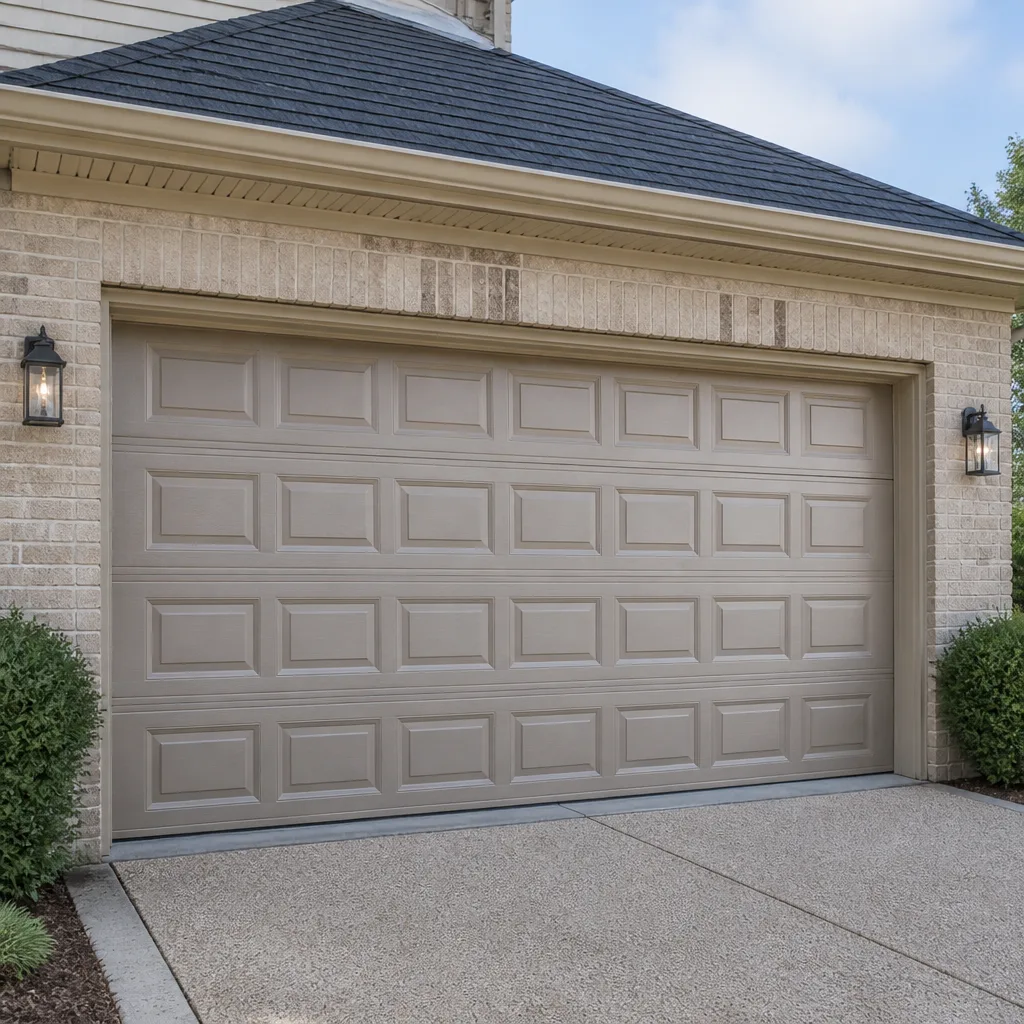 Raised-panel steel
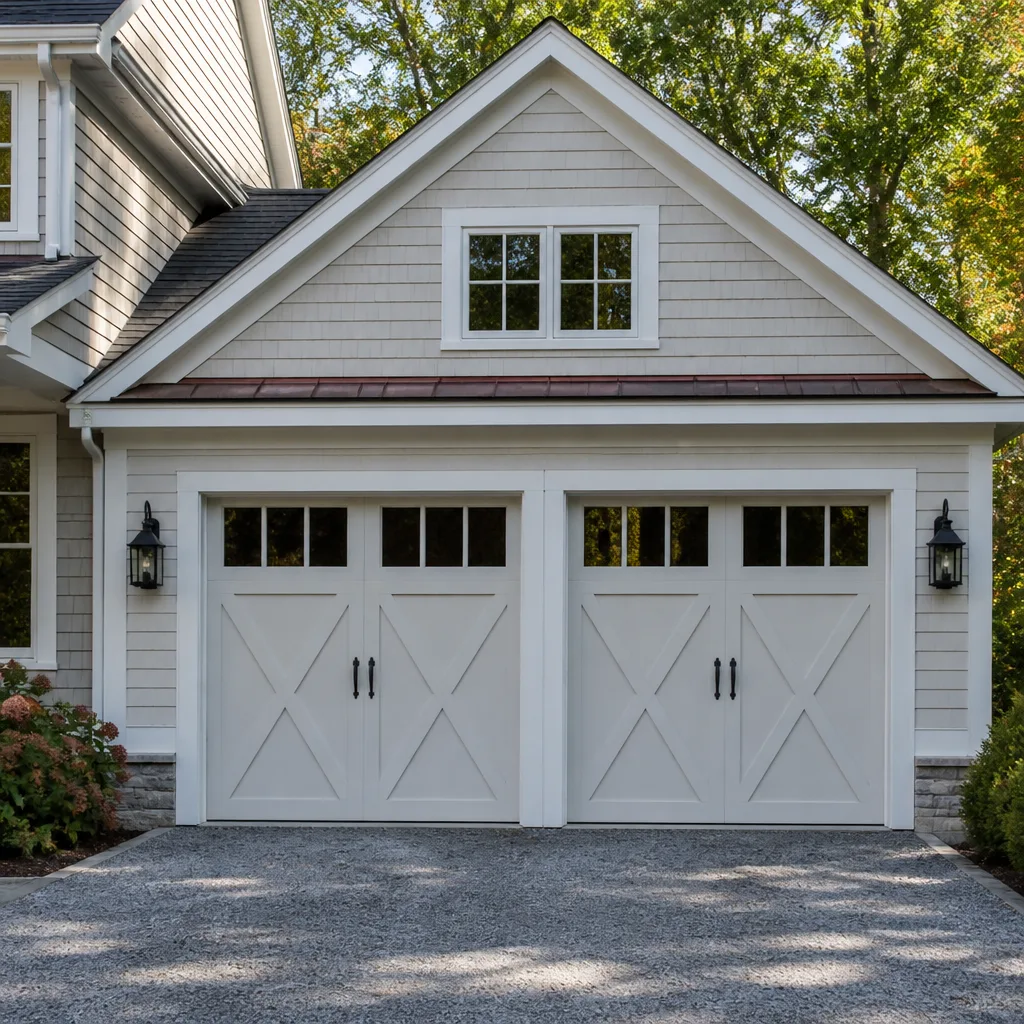 Carriage house
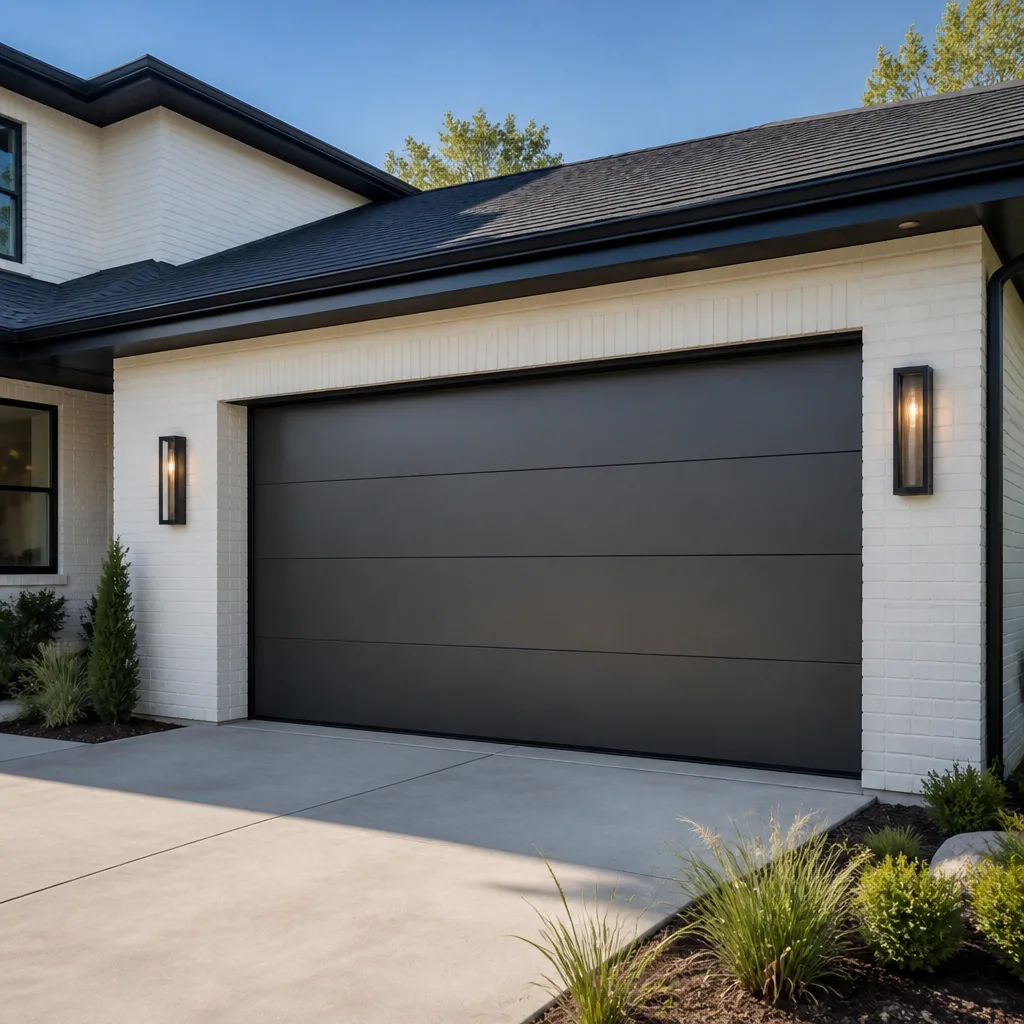 Modern flush
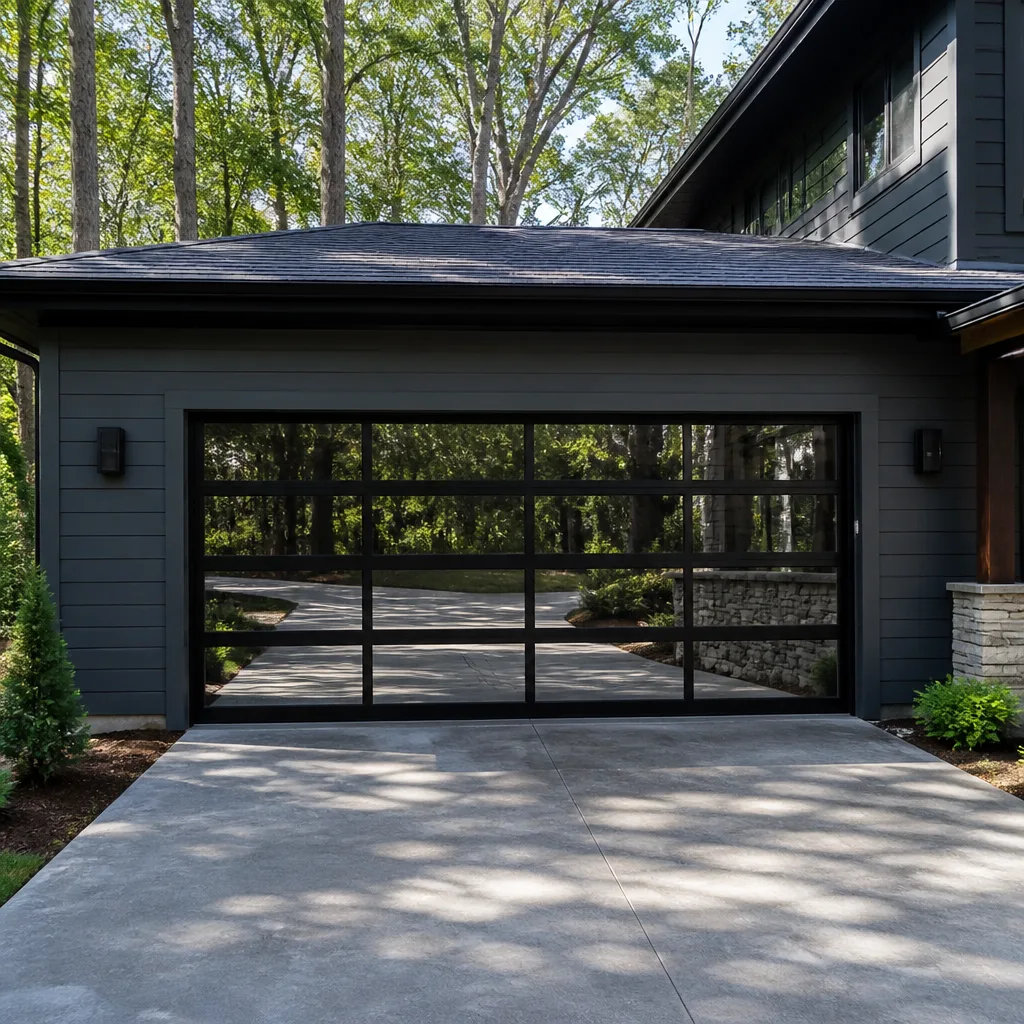 Full-view glass
 LiftMaster openers
 Chamberlain openers
Full 25-point door and opener safety check with every visit - springs, cables, rollers, tracks, and your LiftMaster or Chamberlain opener included
You get a price before we start. It does not change when the pro arrives.
Get your free estimateSeasonal Garage Door Care for Arlington Heights: Year-Round Homeowner’s Guide
Road salt is the most underestimated garage door killer in the Chicago suburbs. Not ice, not wind chill, not the freeze-thaw cycles that crack pavement every March. Salt. Tires pick it up on every winter drive and deposit it on the garage floor, and from there it works its way into the bottom brackets, the cable ends, and the weatherstripping that seals your door. The damage doesn’t announce itself. It shows up as a stiff hinge, a frayed cable strand, a bracket that suddenly gives way on the first hard freeze in Arlington Heights. This guide maps what to check and when, season by season, so your door isn’t a casualty of a problem you could have caught in September.
Quick Answer
Seasonal garage door care in Arlington Heights means checking and adjusting torsion spring tension as temperatures drop below 20°F, inspecting cables and bottom brackets for road-salt corrosion each spring, watching for tracking noise and opener logic-board heat stress in summer, and completing a specific fall sequence of tasks before the first hard freeze. The fall window matters most. That’s when you have time to correct problems before cold weather makes them worse.
Styles & brands we work with
- Raised-panel steel
- Carriage house
- Modern flush
- Full-view glass
- LiftMaster openers
- Chamberlain openers
Table of Contents
- Winter Prep: What Cold Does to Springs and Hardware
- Spring Checklist: Assessing Road Salt Damage
- Summer: Heat, Opener Logic Boards, and Tracking Noise
- Fall: The Most Critical Maintenance Window
- How an Insulated Door Affects Attached-Garage Temperature
- A Year-Round Schedule You Can Actually Keep
- Arlington Heights-Specific Considerations
Winter Prep: What Cold Does to Springs and Hardware
Torsion springs are steel coils under high tension, and steel behaves differently at 15°F than it does at 70°F. Cold metal contracts, the spring loses some of its stored energy, and the door feels heavier than it did in October. The balance point shifts. When temperatures stay below 20°F for an extended stretch in Arlington Heights, that shift becomes noticeable – the opener works harder, the door lifts unevenly, and a spring that was already near the end of its life cycle is far more likely to fail.
Torsion spring tension needs to be adjusted as temperatures drop, but it needs to be adjusted by someone who knows what they’re doing. This is not a homeowner task. A torsion spring under load carries enough stored energy to break bones or worse if it’s released without the proper winding bars and the right technique. We flag this in every seasonal guide because it’s the single most dangerous piece of hardware on any residential garage door.
What you can do before winter:
- Listen for the sound of the door. A door that creaks, groans or seems to labor on cold mornings is sending a signal. Grinding or squealing usually points to bearing plates or rollers that need attention before cold tightens everything up.
- Check the door balance. Disconnect the opener (most have a manual release pull) and lift the door halfway by hand. It should stay there. If it drops or feels very heavy, the springs are out of balance and should be checked by a technician before winter makes it worse.
- Test the weatherstripping. A bottom seal that’s become stiff or brittle won’t seal out cold air or snow that blows in during a storm. It’s a cheap replacement compared to the damage a gap can cause.
- Clear the track of debris. Leaves and grit caught in the track will freeze in place, and the door will fight them every time it moves.
- Book a professional spring check if the door is more than a few years old. A torsion spring’s life span is measured in cycles, not years, but a visual inspection by someone trained on the hardware is worth scheduling before the hard freezes arrive.
If a spring does break in the middle of a cold snap, it’s usually an emergency since the door won’t lift and may not be secure closed. That’s the kind of call that doesn’t wait for a convenient time. garage door spring repair is a core service for a reason – we work on the brands most Arlington Heights homes actually have installed.
Spring Checklist: Assessing Road Salt Damage
By the time the last snow melts in Arlington Heights, your garage has been a salt collector for months. Winter tires track in brine from the main roads, the salt dries on the concrete, and the corrosive residue migrates toward anything metal near ground level. Spring is when you assess the damage. Three areas take the brunt.
Cables. The steel cables run from the bottom brackets up to the drums at the top of the door, and they’re exposed to everything the bottom of the door encounters. Road salt corrodes the cable surface, and once the galvanized coating is compromised, individual strands begin to fray. Run a hand along each cable with the door closed (don’t grab or pull – just look) and check for fuzziness, broken strands, or rust-colored staining. A frayed cable is a safety issue and should be replaced by a technician before it fails.
Bottom brackets. These are the metal brackets at the lower corners of the door, and they’re a salt trap. The bracket connects the bottom of the door to the cable and the track, so it’s both load-bearing and close to the floor where salt residue collects. Look for rust bloom, flaking paint, or a bracket that looks thinner than it should. Bottom brackets can be replaced. A bracket that fails while the door is under tension is another story.
Hinges. The hinges between door panels are smaller, but they’re also at a height where salt spray from car tires reaches them. Rusted hinges add friction to every door cycle, which stresses the opener. A hinge that seizes can also start pulling the rollers out of the track. If hinges squeak or look rusty, they need replacing or lubricating with a proper garage-door lubricant, not WD-40, which attracts dirt.
Weatherstripping and the bottom seal. The rubber seal along the bottom of the door takes direct salt exposure. Spring is a good time to check whether it’s cracked, stiff, or pulling away at the ends. Replacing a bottom seal is straightforward and protects the inside of the garage from moisture.
A spring inspection combined with corrosion assessment is worth doing by early April. garage door repair covers cable and bracket replacement too, so the same visit can handle the whole lower-door system.
Summer: Heat, Opener Logic Boards, and Tracking Noise
Hot weather stresses garage doors in ways homeowners don’t expect. The door doesn’t fail from heat the way it fails from cold, but summer is when hidden problems start becoming noisy problems.
Opener logic boards are essentially small computers, and like any computer, they’re sensitive to heat. An attached garage can get very hot in July and August. When the logic board overheats, the symptoms range from flaky remote response to the opener re-initializing after a door opening, or the safety sensors triggering in the middle of a cycle. If you’ve been noticing any of these in summer but not in winter, heat stress is one likely cause. LiftMaster and Genie units are the most common systems we work on in Arlington Heights, and both have diagnostic patterns that point toward a heat-stressed board or motor.
Thermal expansion is the other summer issue. The aluminum or steel tracks expand slightly in high heat, and the door panels themselves expand at a slightly different rate. That small difference can create tracking noise – a rubbing or scraping sound on one side of the door. The misdiagnosis trap here is to assume it’s a failing track, when it’s often a track that simply needs a minor adjustment or a roller that needs replacing. Tightening or shifting the track without knowing why can make it worse.
What summer calls for:
- Clean the opener vents. Most opener units have ventilation slots. Dust and debris reduce airflow and contribute to overheating. A quick vacuum or compressed air (short bursts) around the vents helps.
- Test the safety sensors. Summer is often when the sensors get knocked out of alignment. With the door open, walk through the beam. The door should reverse or fail to close. If it does not, get it fixed before anything else.
- Listen for tracking noise on hot days. A scraping sound on both sides is likely a roller or hinge issue. A scraping sound on one side, only in heat, is a track expansion issue. Either way, have it checked before fall rather than after a misdiagnosed fix.
- Lubricate rollers and hinges. Summer is a good time to apply a proper garage-door lubricant to rollers, hinges, and the opener drive gear and rail. Not oil, not WD-40.
If the opener itself is failing, garage door opener repair covers board diagnostics and drive system service. We work on Chamberlain, Craftsman, LiftMaster and Genie units, which covers the most common systems in Arlington Heights.
Fall: The Most Critical Maintenance Window
Fall is when a garage door in Arlington Heights goes into winter mode, and you have a limited window to make sure it gets there in good shape. The first hard freeze usually arrives in late October or early November. Before that point, any lubrication that needs applying works, any repair that requires the door to be functional can get done, and any spring or cable that’s showing wear can be replaced without an emergency call.
The exact sequence that matters for fall:
- Balance test first. Disconnect the opener and lift the door halfway. If it drops, the springs are unbalanced. This is the item you want to know about before anything else.
- Inspect and lubricate the moving parts. Lubricate torsion springs, hinges, rollers, and the opener rail with a garage-door-rated lubricant. Do this before cold sets in.
- Test the weatherstripping and bottom seal. A bottom seal that’s flexible now may harden in cold. Replace anything that’s already cracked or pulling away. Check the threshold seal at the floor too.
- Clear and check the tracks. Remove any debris. Look for bends, loose fasteners, or track sections that are pulling out of alignment. Cold metal contracts and makes a misaligned track worse.
- Check the balance springs visually. Look for rust, gaps in the coil, or visible stretch. A spring that looks worn in September is a spring that’s more likely to break in January.
- Test the safety reverse. Place a 2×4 flat on the floor under the door and close it. The door should reverse on contact. Do the sensor beam test as well.
- Inspect the cables one more time. They’ve been through a full summer. Any fraying now is worse in cold.
- Set a date for a professional inspection if anything looks off. A trained technician can catch what a visual look-over misses.
A professional inspection in September or early October is worth scheduling precisely because it gives you a calm window to address problems. Once cold sets in and a spring breaks, the situation becomes an emergency. We recommend getting that inspection done while the weather is still cooperative.
How an Insulated Door Affects Attached-Garage Temperature
An insulated garage door is not a heating system. It’s a barrier. A well-insulated door slows heat transfer between the garage and the outside, which matters for an attached garage because the garage shares walls and sometimes a ceiling with the house. The realistic expectation for Illinois winters is that an insulated door reduces heat loss but doesn’t make the garage a heated space. The temperature inside a garage with an insulated door still tracks the outside temperature closely; it just doesn’t get as cold as a detached, uninsulated garage does.
For homeowners in Arlington Heights with an attached garage and living space above or beside it, an insulated door helps in two directions. In winter, it slows the loss of heat that escapes through the shared wall. In summer, it slows heat gain that makes the garage uncomfortable and puts more thermal load on the walls. R-value matters, and a higher R-value slows heat transfer more; but the practical difference between a mid-range and a high-R-value door in an Illinois winter is a matter of degree, not a transformation of the space.
Clopay and Amarr are the two door brands most often installed with factory insulation in this area, and both offer genuinely insulated core construction. A well-fitted insulated door paired with a proper bottom seal and side weatherstripping is the most effective combination for keeping an attached garage more comfortable year-round.
The garage door itself doesn’t guarantee a comfortable space above it. If your goal is reducing heat loss from a room above the garage, insulation on the ceiling and proper air sealing matter more than the door. An insulated door is still worth the investment in an Illinois climate, but it’s part of a system, not a standalone solution.
A Year-Round Schedule You Can Actually Keep
Most seasonal maintenance checklists are demanding enough that nobody actually follows them. Here’s a shorter version built around what actually matters most in an Arlington Heights climate.
- Monthly: Visual check of the door cable and spring condition, a listen for new or unusual sounds, and a test of the safety reverse.
- Every three months: A more thorough visual inspection of hinges, rollers, and the bottom seal. Lubrication once per quarter on hinges and rollers.
- Fall (September or October): The full seasonal checklist above. Professional inspection if anything looks questionable or if the door is aging.
- Spring (March or April): Salt-damage assessment, cable and bracket check, weatherstripping replacement if needed.
The door will tell you when something’s wrong if you’re paying attention. The trick is knowing what’s normal and what needs fixing – which is where a professional second opinion pays for itself.
Arlington Heights-Specific Considerations
The climate pattern here is real winter weather, not mild Midwest winter weather. Sub-zero wind chills are a regular part of January and February in Arlington Heights. Sub-zero wind chills do specific things to garage door hardware: they make the door harder to operate, they stress the torsion springs at precisely the point where they’re weakest, and they make any existing weatherstripping problem much worse.
Most Arlington Heights garages are attached garages on single-family homes. Many were built in the 1960s through the 1980s, and the original doors on some of those garages are still in place. Doors that age are at or past the typical spring life cycle, and the weatherstripping has often been replaced at least once. If you’re in an older block near downtown Arlington Heights or in a subdivision built in that era, it’s worth having a technician look at the spring system and the door hardware before winter. The door might be perfectly fine, but the question deserves a real answer based on the age and condition of what’s actually there.
Road salt is a factor from November through March. Main thoroughfares and residential streets alike get treated, and the salt tracks in on every tire that crosses the threshold. If your garage floor stays wet or damp through the winter, that’s salt-laden moisture working on every piece of steel near the floor.
If you’re thinking about a replacement door, this is the right season to start. Arlington Heights Garage Door Repair Co provides installation estimates without pressure. A new Wayne Dalton or Clopay door is a substantial purchase, and the estimate should be written down before anything is ordered.
Common Mistakes to Avoid
- Waiting for the spring to break before doing anything. A failed spring is an emergency call. A spring showing wear is a scheduled repair. One costs you a Sunday afternoon and a phone call; the other costs you a garage door that won’t open on a 10°F morning. The difference is catching it in October.
- Using WD-40 on the tracks and rollers. WD-40 is a solvent, not a garage-door lubricant. It removes the factory lubricant and leaves the moving parts drier. Use a purpose-made garage-door lubricant. The track itself should be cleaned, not lubricated – grease on the tracks attracts grit and turns into a paste that wears the rollers.
- Assuming a noisy door is a failing track. In summer, a scraping noise on one side is often thermal expansion. In winter, a stiff door is often a balance issue, not a track failure. Misdiagnosis leads to tightening or shifting things that shouldn’t be moved, which creates a real problem where there wasn’t one.
- Trying to adjust a torsion spring yourself. Torsion springs carry enough stored energy to cause serious injury. The winding bars, the number of turns, and the safety rules around these are trade knowledge. Calling a technician for a spring adjustment is a fair price for the safety.
- Skipping the fall inspection because the door feels fine. A spring that’s about to break usually feels perfectly normal right up until it doesn’t. A visual inspection by a trained technician catches things that a homeowner can’t see from the outside.
- Ignoring the bottom seal. A stiff or cracked bottom seal lets in cold air, snow, and wind-driven rain. It’s one of the cheapest parts of the door to replace and one of the most consequential to ignore in Illinois.
- Assuming an insulated door solves every garage-comfort problem. An insulated door slows heat loss from the garage to the outside, but it doesn’t protect a room above the garage from heat loss through the unsealed ceiling above. Sealing the space above the garage is often more effective per dollar than upgrading the door.
See the difference
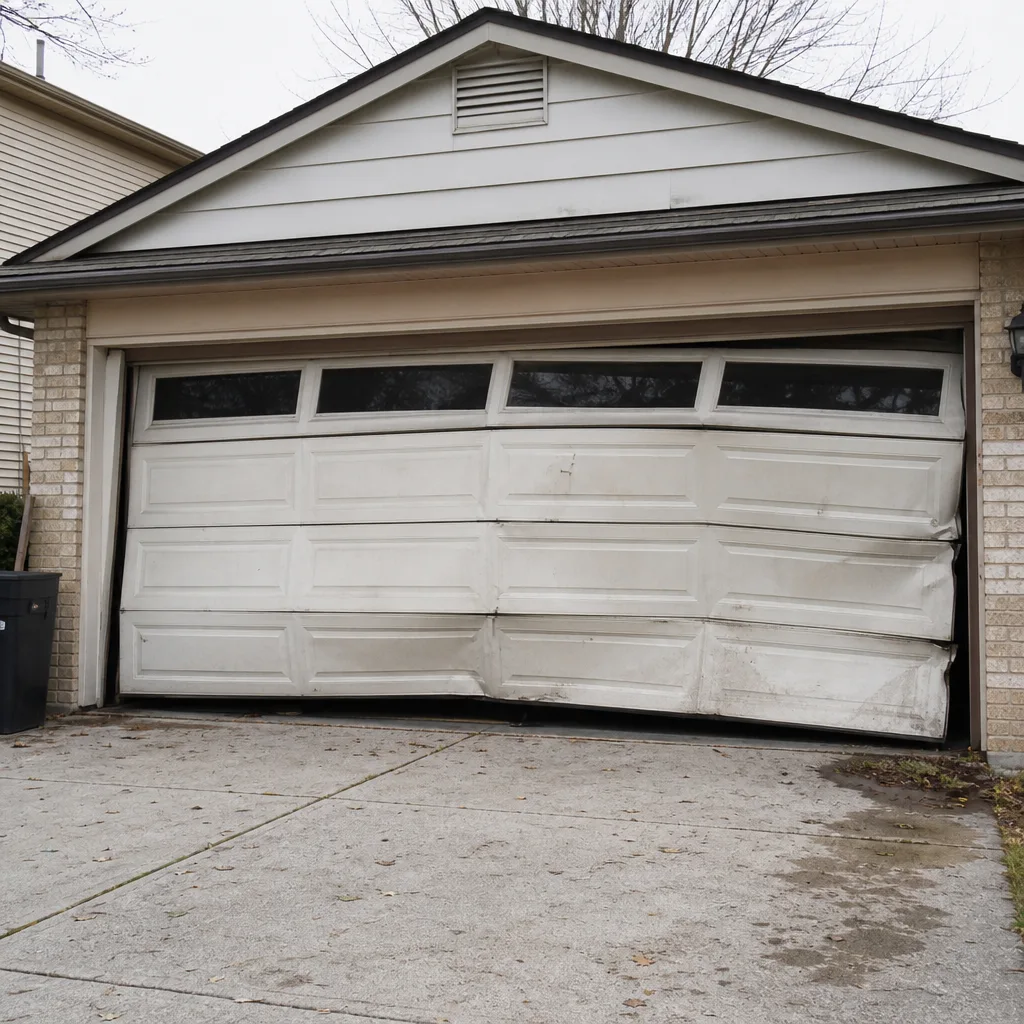 Before
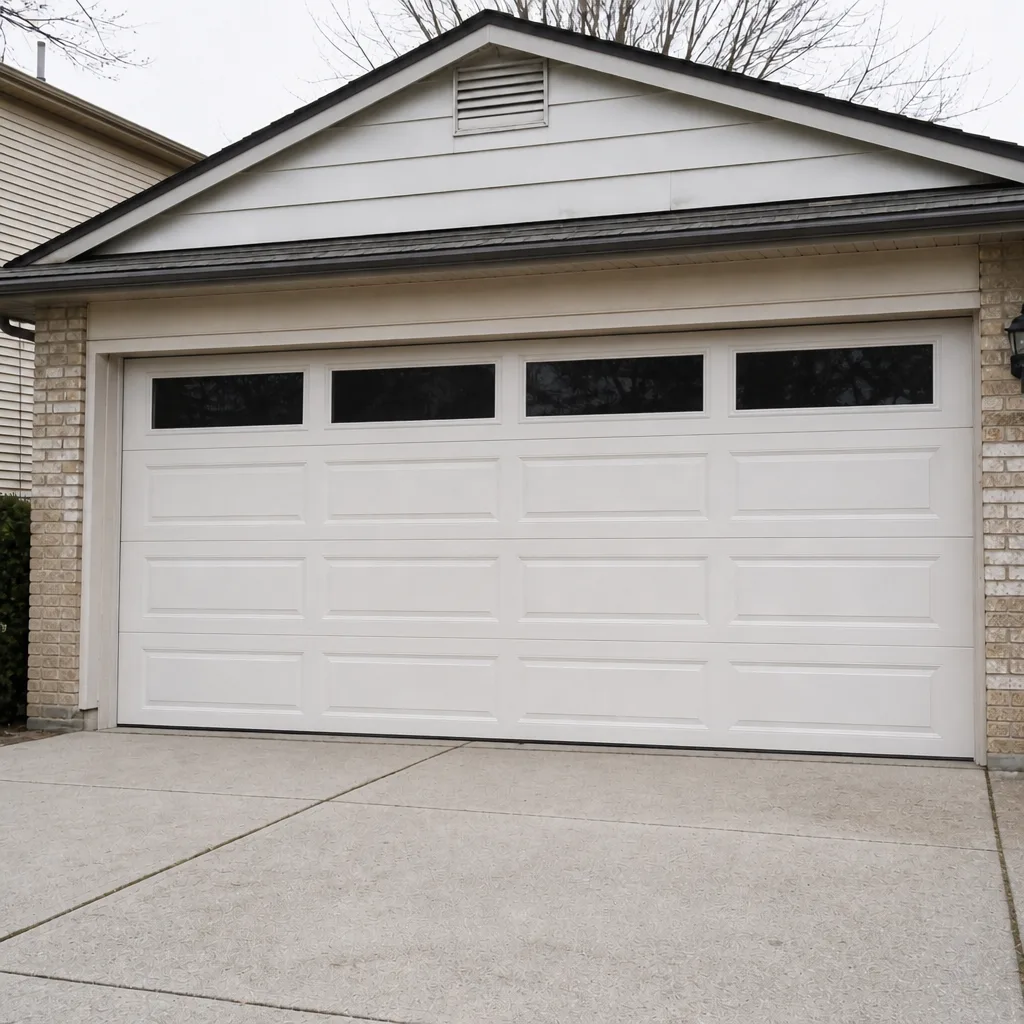 After
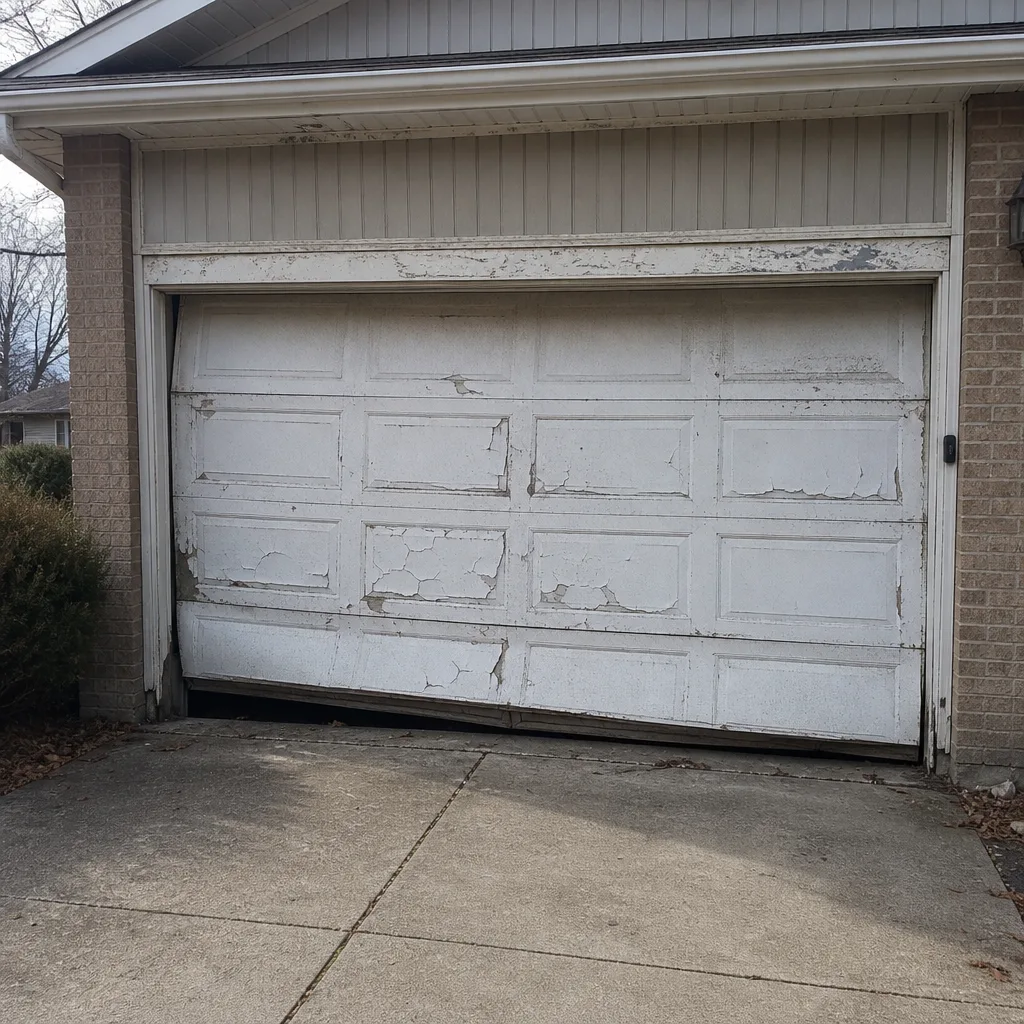 Before
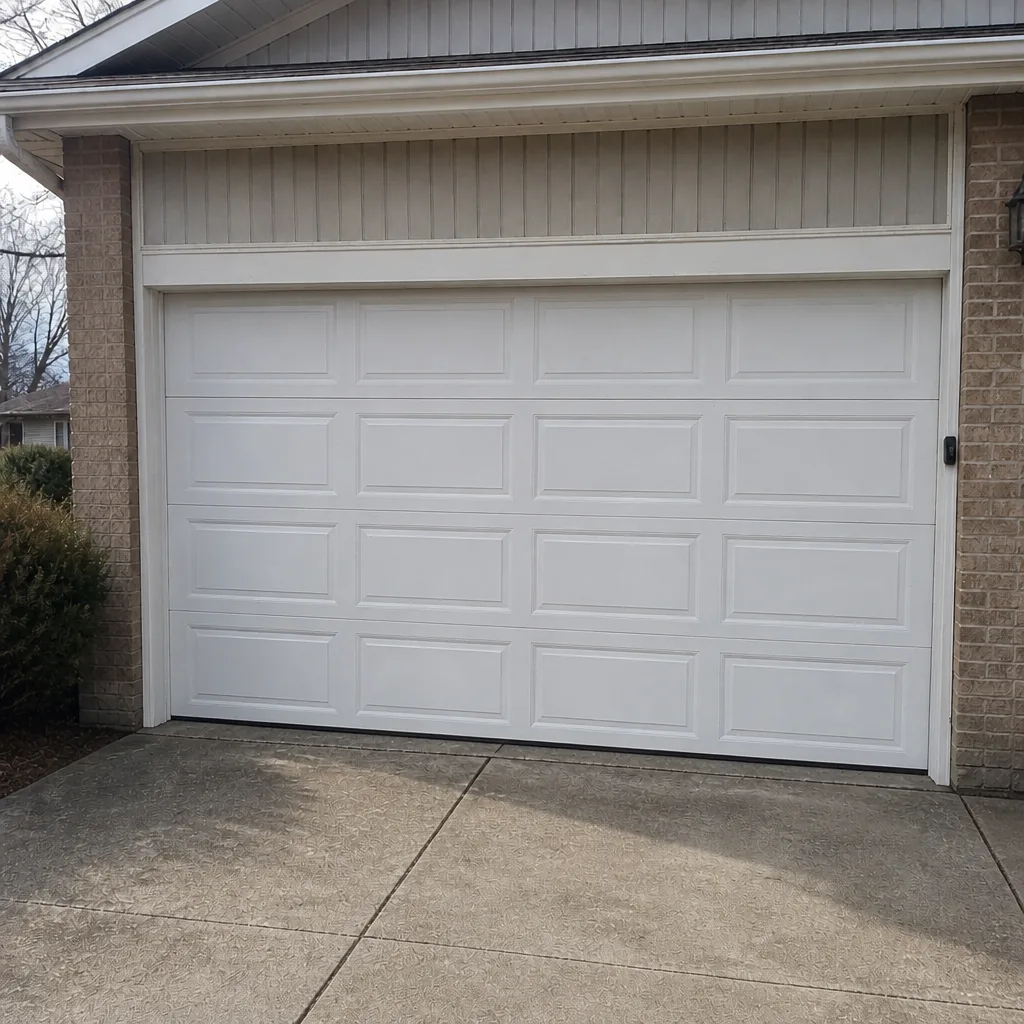 After
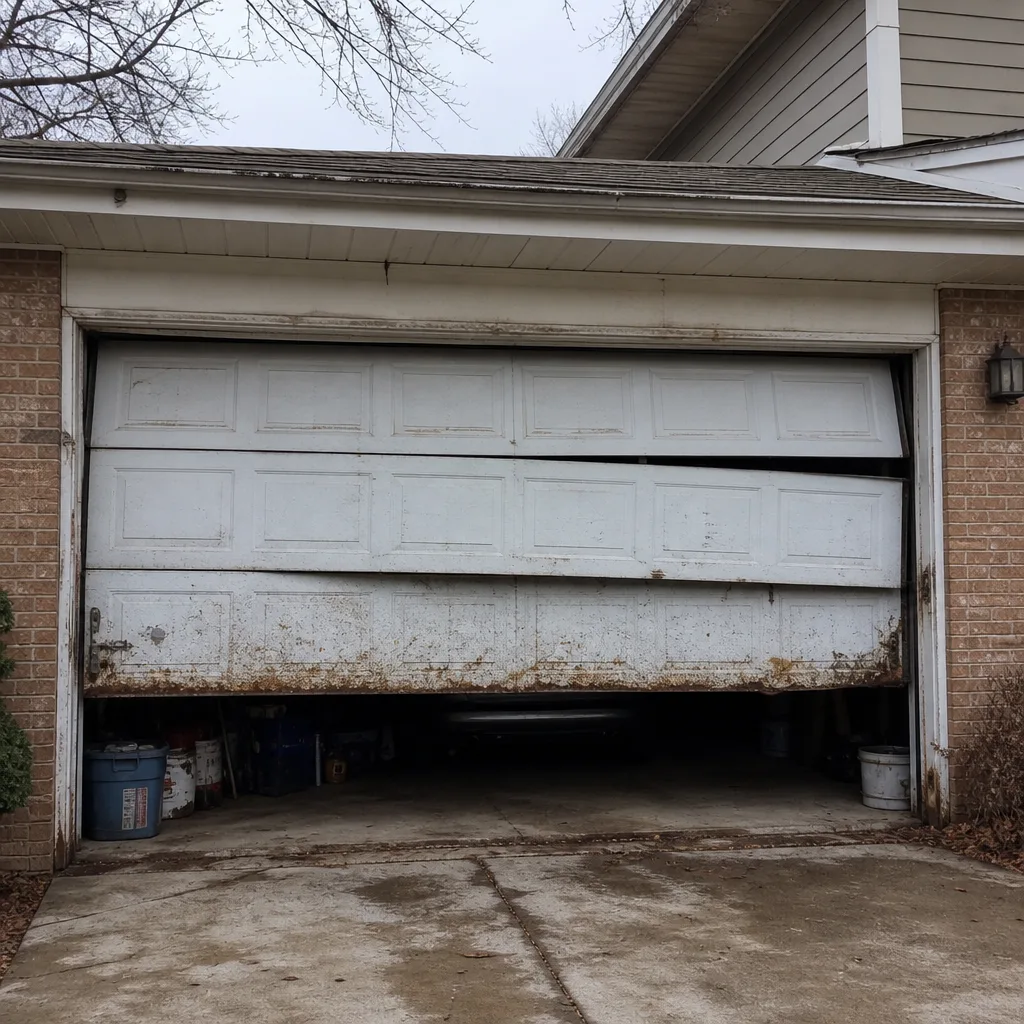 Before
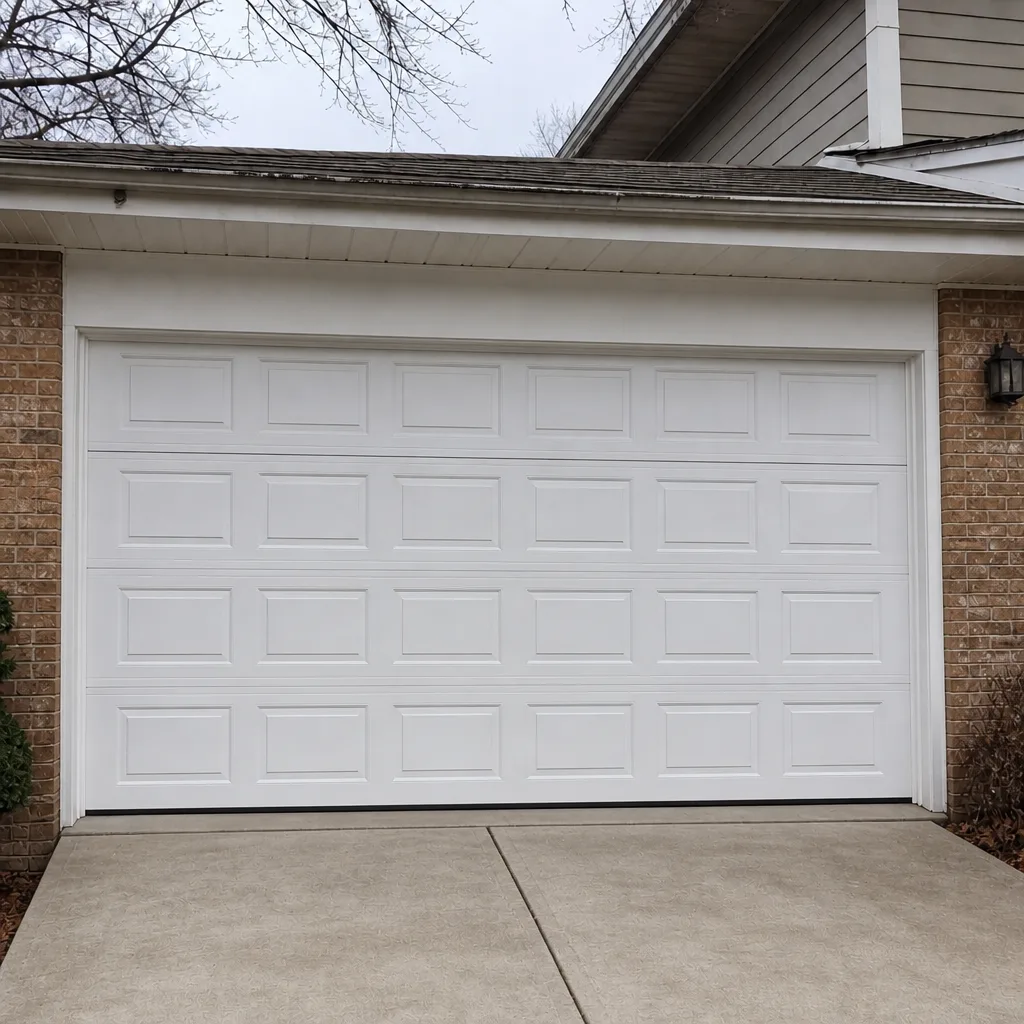 After
When to Call a Professional
You need a trained technician when a torsion spring breaks or shows obvious wear, when a cable is frayed or has strands that are broken, when the bottom brackets show structural rust or deformation, when the opener fails to respond to remotes or is cycling irregularly, or when a safety sensor doesn’t stop the door from closing. Also call when the door is off its track, when a door panel is cracked or bent, or when the spring adjustment isn’t keeping the door balanced through seasonal temperature changes.
The spring system, the cable system, and the opener electronics are all areas where a wrong fix can make the situation worse. Our technicians have up to 13 years of experience on the brands most Arlington Heights homes have, including Clopay, Amarr, Genie, and LiftMaster. If you’re not sure whether a noise or a symptom is worth the call, call and ask. A phone conversation is free and it will save you a lot of guessing.
Arlington Heights Garage Door Repair Co offers free estimates in Arlington Heights. Call (877) 792-5722. We answer 24/7. Fast dispatch from 7am to 7pm, Sunday through Friday.
Frequently Asked Questions
Once a year for a professional inspection, ideally in the fall before the first hard freeze. For doors past their first decade, an inspection in both fall and spring makes sense because the spring and cable damage from salt exposure doesn’t always show up immediately. If you’re hearing new sounds or the door feels heavier than it used to, call for an inspection without waiting for the annual cycle.
Yes for lubrication of the hinges and rollers, visual inspection of cables and weatherstripping, cleaning the tracks, and testing the safety reverse feature. No for anything involving the torsion spring, the cables under tension, or the door balance. Those involve enough stored energy to injure someone who doesn’t have the proper tools and training. When in doubt, call and ask first.
Cold contracts the steel parts, reduces the spring’s stored energy, and makes the metal less forgiving of any existing wear. A spring that was already near the end of its service life is far more likely to fail when temperatures drop below 20°F in Arlington Heights. Lubricating the moving parts in the fall helps, but it doesn’t extend the life of a spring that’s already failing. If the door has been getting harder to open over the fall, schedule the inspection before December.
Yes. Road salt carried in on winter tires coats the garage floor, and the corrosive residue works on anything metal at ground level: bottom brackets, hinges, and the lower portions of the cables. It’s easy to miss because the damage is gradual. Spring inspections should focus specifically on the lower door hardware, and any bracket or cable that shows rust or fraying should be replaced before winter makes it worse.
An insulated door slows heat transfer, so it stays warmer inside the garage and reduces heat loss through the wall shared with the house. It doesn’t make the garage a heated space, though. The temperature still tracks the outside closely. A well-sealed insulated door is measurably more comfortable than an uninsulated door; it’s just not a substitute for heating or for sealing the ceiling above a room over the garage.
We’re closed Saturday. We answer 24/7, and a call outside dispatch hours is booked into the next opening, Sunday through Friday, 7am to 7pm. If your door won’t close or won’t open, call (877) 792-5722 and we’ll book the first available slot on Sunday.
We don’t charge a premium for same-day or emergency work: the price is quoted and agreed before any work starts, and the written estimate is the price you pay. Estimates are free. What you need for an exact figure is a description of the problem and the door system, which is what the phone call covers. Call (877) 792-5722 for a free estimate.
The Bottom Line
Seasonal care in Arlington Heights is not the same as seasonal care in a mild climate. Road salt, sub-zero wind chills, and freeze-thaw cycles create specific vulnerabilities at specific times of year, and a generic checklist written for a warmer place won’t catch them. The fall window matters most for pre-emptive spring checks and balance adjustments. Spring is for assessing what winter did to the lower door hardware. Summer is for heat-related opener and tracking issues. The door is a mechanical system, and regular, seasonal attention is what keeps it working reliably through the winter. If anything in this guide sounds like something you’re noticing right now, call (877) 792-5722 or a local pro. We answer 24/7. Fast dispatch from 7am to 7pm, Sunday through Friday.
Written by the team at Arlington Heights Garage Door Repair Co.